Four live sessions
A Leadership & Team Program
The Space Between Us
The Space Between Us
A four-session leadership & team program about the very human side of psychological safety.

When it's safe to speak - but we still hold back.
When it's safe to speak - but we still hold back.
Most organisations have already done a great deal of work on psychological safety. Values are in place.Leaders have been trained. People are encouraged to speak up, challenge ideas, give feedback and admitmistakes. And all of that matters. Of course it does.
And still, in the moments that matter most, it doesn't always hold.
Someone has something to say - and decides not to. Feedback gets softened. Disagreement becomes personal. A difficult conversation is rehearsed ten times before it happens. Everyone leaves the same meeting with a different version of what just took place.
Same room. Different worlds.
Because we don't simply experience what happens between us. We experience what we think is happening.
She doesn't respect me.
He thinks I'm incompetent.
There's no point saying anything.
I need to defend this.
I shouldn't have said that.
And suddenly, it's not just about what's being said. It's about what we think it says about us, about "me".
The Space Between Us starts there.
Not with another communication model or another set of behaviours to practise, but by looking more closely at what is already happening - in each of us, and between us - in the moments when openness becomes difficult.
Four sessions
Four sessions
1
1
Same room. Different worlds.
Same room. Different worlds.
How the very same moment can become a completely different experience for everyone in it.
2
2
When thought feels like reality.
When thought feels like reality.
How what we think is happening can quickly become what we are convinced is happening.
3
3
When it all becomes personal
When it all becomes personal
How quickly disagreement, feedback and uncertainty can become about us.
4
4
What changes between us
What changes between us
What changes between us when we see more clearly what's happening in our own minds.
Nothing to prepare
Four live sessions
Nothing to prepare
No role-play, no pressure to share
Not another model to apply
No role-play, no pressure to share
Not another model to apply
After four sessions - what changes?
After four sessions - what changes?
The aim isn't for everyone to think the same way, agree more often or become better at managing their reactions. The people in the room haven't changed. They will still disagree, misunderstand each other, get irritated and see things differently.
The difference is that they may begin to see how much of what happens between them is actually happening within them.
The assumptions, interpretations and thinking that can so easily become the other person, the problem or simply the truth become easier to see for what they are.
And when we see more clearly what's happening in our own minds, there's less need to be agreed with, approved of or seen in a particular way - and less reason to hide what we really think.
The program overview
The program overview
Everything in one place - structure, sessions, format, and investment.
About
Suzanne Lång
Suzanne Lång
I've always been what some would call a high performer - committed and cared deeply about doing good work.
I was competent, I took responsibility, worked hard and I had ideas - lots of them. But for decades, I cared equally about how I was being perceived while doing a good job. And that takes a lot of energy.
So, I didn't always bring all of myself into the room.
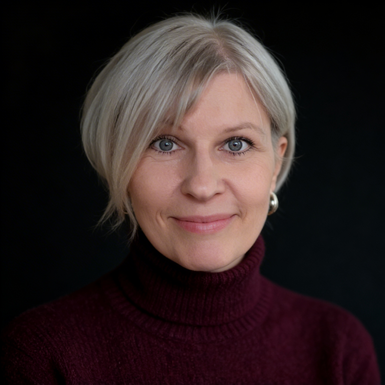
I held back. I read the room. I worked out who I could say what to. I made myself smaller around some people and more confident around others. Sometimes I spoke up. Sometimes I decided it wasn't worth it. And much of the time, I believed my reactions were simply telling me something objectively true about the people around me.
I tried many ways to become “better” - methods, models, different perspectives. But none of them touched the constant pressure of wondering how I was doing, what other people thought of me, or whether I'd got something wrong. What changed was beginning to see how much of that experience was happening in my own mind - while it looked as though it was coming from the people and situations around me.
That changed how I saw other people too.
Today, I work with curious, ambitious leaders and teams to explore exactly that - what each of us brings into the space between us, usually without knowing it - and what changes when we begin to see it.
ICF Professional Certified Coach (PCC) · Certified Executive Coach · Facilitator · 10+ years in leadership development
___MESSAGE___
___MESSAGE___